Precooked Fish for Foodservice: Save Time & Control Costs

In a kitchen plating hundreds of covers a day, fish is one of the most demanding items on the menu. It needs cleaning, filleting, pin-bone removal, cold storage, odour management and, above all, hands that know exactly when to pull it off the heat. One minute too long and the portion is damaged..
Precooked ready to eat fish removes those risks. It arrives cleaned, gutted,cooked and portioned, and all it needs before service is reheating. For catering operations, hotels, restaurants and any unit running high consumption volumes, that difference translates directly into time and money.
What precooked fish actually is
These are fillets or whole fish that have been cleaned, gutted, deboned, cooked under controlled conditions and packed in fixed portions. In your kitchen they never enter the prep line. They go straight to service: oven, steam, or cold applications such as salads, bowls and buffet displays.
This is not a compromise on quality. It moves the most demanding stage of preparation out of the kitchen and into a process where every batch runs to the same parameters.
Why precooked fish works in high-volume kitchens
1. Time saved where it hurts most
Fish prep is one of the most labour-intensive jobs in a professional kitchen. Cleaning, skinning, pin-boning, portioning, then cleaning down benches and equipment afterwards.
With precooked fish, that entire stage disappears. Staff are only committed to regeneration and plating. In operations where peak service is decided in minutes, such as hotels running large breakfast or half-board covers and caterers plating hundreds of guests simultaneously, the effect on ticket times is immediate.
2. Predictable food cost, with no yield loss
When you buy whole fish, you are not only buying the edible part. You pay for head, bones, skin and processing loss, and the real yield varies from batch to batch and from chef to chef.
Precooked fish arrives at a defined portion weight. You know exactly what the plate costs before it leaves the kitchen, you know how many covers an order will produce, and menu costing stops being an estimate. For operations working on contracts and a fixed price per head, that accuracy is decisive.
3. The same plate every service, whoever is on shift
Fish is unforgiving. It dries, it sticks, it falls apart. In units with seasonal staff or multiple shifts, variation in the result is a given.
Because the critical cooking stage has already been handled under control, in an industrial environment, the last portion of the evening matches the first. Guests get the same dish regardless of who is on the line, which protects reviews and the reputation of the venue.
4. Less pressure on staffing and training
Finding experienced chefs who handle fish properly is one of the sector’s hardest problems, especially in high seasons. Precooked fish sharply reduces the skill level required on the line and shortens onboarding for new staff. The kitchen becomes less dependent on specific individuals.
5. Food safety and simpler HACCP
Less raw fish handling means fewer control points, lower cross-contamination risk and less space tied up separating raw from ready-to-eat products. For hotels and mass catering units working under strict protocols, simplifying the flow is a significant benefit in itself.
6. A cleaner kitchen, without the odour
Cleaning fish leaves odours, liquid waste and a load on drainage and extraction systems. In open kitchens and buffet setups, that is a practical problem. With precooked fish, waste volume and cleaning costs drop noticeably.
Where it fits best
- Catering and events: large numbers of covers plated simultaneously, often off-site, with limited equipment.
- Hotels: buffets, half-board and all-inclusive service, where repeatability matters more than customisation.
- High-turnover restaurants: faster ticket times and more table turns.
- Delivery and cloud kitchens: small footprint, lean teams, and the need for a consistent result off-premise.
- Mass catering and corporate dining: planned menus and tight cost per cover.
Which precooked fish to put on the menu
Three categories cover the majority of professional menus:
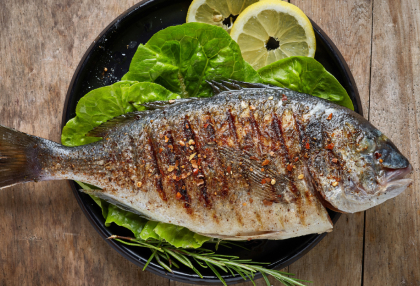
- Sea Bream: a recognisable choice for Greek and Mediterranean menus, ideal for buffets and set menus.
- Sea Bass / Branzino: mild white flesh that works in fine dining as easily as on a simple dish of the day.
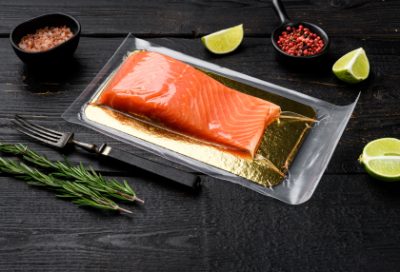
- Norwegian Salmon: one of the most versatile options, serving hot as a main and cold in salads, bowls and brunch menus.
Trust in precooked fish
For a high-volume operation, the question is not whether fish can be prepared from scratch in-house. It is whether it is worth committing time, staff and space to a stage that can be done better and cheaper elsewhere in a controlled environment. Precooked fish answers exactly that: a consistent plate, controlled cost, a faster line.
Frequently asked questions
Is precooked fish lower quality than fresh? No, provided cooking is done under controlled conditions and regeneration is handled correctly. In practice the result is more consistent than a busy line working under pressure.
How long does it take before service? Only the regeneration time in an oven, steamer or salamander. There is no prep stage.
Does it suit smaller operations? It works anywhere space or staffing is tight, but the benefit grows with volume.